Information
Director

| Name | Wen-Chieh Tsai |
|---|---|
| Position | Professor and Director |
| Telephone | +886-6-2757575 ext.58310 (Lab), 58301 (Office) |
| tsaiwc@mail.ncku.edu.tw | |
| Area of Expertise | Plant Molecular Development, Genomics, Bioinformatics, Molecular Biology, Regulation and innovative application of orchid floral morphology; research and application of somaclonal variation mechanisms in orchid tissue culture; analysis and application of secondary metabolites of medicinal orchids |
 Education
1999 – 2005 Ph.D., Department of Biology, National Cheng Kung University
1994 – 1996 M.S., Institute of Biology, National Cheng Kung University
Experience
- 2025.2 – present
Director, Institute of Tropical Plant Sciences and Microbiology, National Cheng Kung University - 2024.8 – 2025.1
Acting Director, Institute of Tropical Plant Sciences and Microbiology, National Cheng Kung University - 2023.8 – present
Head of Planning Division, Biotechnology Center, National Cheng Kung University - 2018 – present
Professor, Institute of Tropical Plant Sciences and Microbiology, National Cheng Kung University - 2012 – 2018
Associate Professor, Institute of Tropical Plant Science, National Cheng Kung University - 2009 – 2012
Assistant Professor, Institute of Tropical Plant Science, National Cheng Kung University - 2007 – 2009
Assistant Professor, Department of Biotechnology, National University of Tainan - 2006 – 2007
Assistant Professor, Department of Biotechnology, Chung Hwa University of Medical Technology
Laboratory Introduction
Our laboratory primarily uses genomics, bioinformatics, molecular biology, and functional genomics to study orchid biology, including the molecular mechanisms of orchid floral development, the evolutionary development of floral zygomorphy (bilateral symmetry) in orchids, and the analysis of orchid secondary metabolomes.
Research Directions
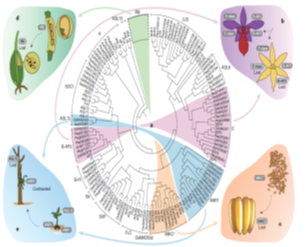
I. Comparative Genomics of Orchids
Orchids account for about 10% of all flowering plants. Their unique floral morphology and highly diverse life strategies have enabled them to successfully adapt to a wide variety of habitats on Earth. Using comparative genomics and related research tools, we compare orchid genomic information to reveal the origin and evolution of orchids and to uncover the secrets of their ability to adapt to the environment.
II. Molecular Regulation of Orchid Floral Development
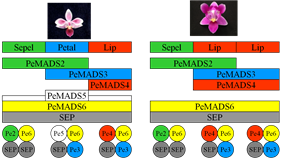
The uniqueness and diversity of floral morphogenesis in orchids have fascinated botanists and orchid collectors for centuries. The complex floral architecture of the Orchidaceae offers an opportunity to explore the birth and evolution of novel genes involved in flower formation, and how they participate in the morphological development of new floral organs. Unraveling the molecular developmental processes and evolutionary trajectory of orchid floral morphogenesis is a key focus of our research.
III. Secondary Metabolomics of Orchids
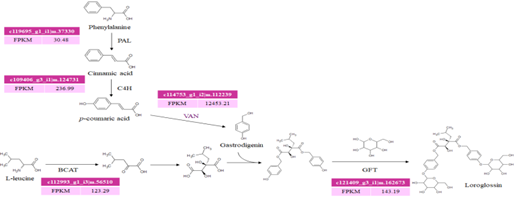
Orchids have a very long history of use in traditional Chinese medicine, dating back to the Shennong Bencao Jing (The Divine Farmer's Materia Medica), which records 365 plants, several of which are orchids. The Shennong Bencao Jing documented many important guidelines on how to use orchids as traditional Chinese medicine. Discovering new medicinally valuable compounds in orchids therefore holds great potential for future development.
Honors and Awards
- Published 19 SCI articles in the past five years, with a total impact factor of 134.34 (average above 7 per article), including one as first author in Nature Genetics and one as corresponding author in Nature.
- Conducted 10 research projects in the past five years, obtained 4 patents, and completed 1 technology transfer.
- Received the Award of Excellence in the Young Scholar Innovative Research Selection of the Taiwan Comprehensive University System (2015).
Selected Publications
- Cai et al. (2015) The genome sequence of the orchid Phalaenopsis equestris. Nature Genetics 47: 65-72.
- Lin et al. (2016) Genome-wide identification and characterization of TCP genes involved in ovule development of Phalaenopsis equestris. Journal of Experimental Botany 67: 5051-5066.
- Zhang et al. (2017) The Apostasia genome and the evolution of orchids. Nature 579: 379-383.
